Forty Minutes Before the Headliner: Inside the Best Free Show in Town
Photo: Lunchbox LP, CC BY 2.0, via Wikimedia Commons
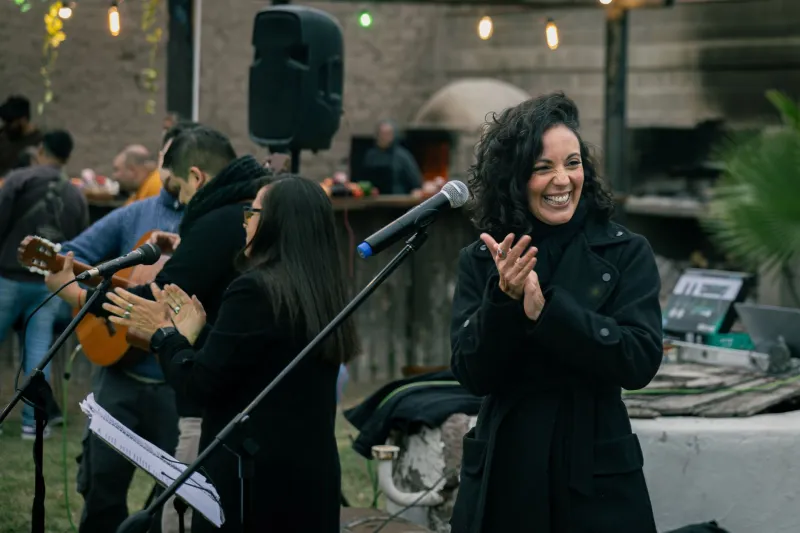
There's a moment, right around quarter past six, when the café shifts gears. The espresso machine is still running its evening rhythm, the chairs haven't all been turned toward the small stage yet, and a musician is crouched by a DI box untangling a cable. The headliner won't go on for over an hour. But the show has already started.
This is the opening set — the slot nobody buys a ticket for, because at most cafés there's no ticket to buy. You walk in, you order a pour-over or a cortado, and you get a front-row seat to an artist who might be playing arenas in three years. Or might not. That's the gamble, and honestly, it's the fun of it.
The Room Nobody Booked
Ask any touring musician about the opener's slot and you'll get a wince. It's the set that starts while people are still deciding whether to stay. But here's what the wince leaves out: at a café, that early crowd isn't a hostile one. It's regulars. People who come every Thursday, who know the barista by name, who are genuinely happy there's something happening besides their usual crossword.
"I'd rather play to fifteen regulars at a coffee shop than forty distracted strangers at a bar," one singer-songwriter told us after a recent set in a converted roastery in Grand Rapids. "The regulars actually listen. They're not yelling for drinks."
Bookers have noticed too. At smaller venues, the opener slot has quietly become a proving ground — a low-risk way to test a new artist in front of a crowd that will forgive a rough song or two in exchange for a good flat white.
Why the Timing Actually Works
The 6:15 start sounds like a scheduling compromise, and sometimes it is. But it also happens to be a golden window for anyone with a day job. You leave work, you arrive hungry for something that isn't a screen, and you're settled in before the headliner even loads in. The opener gets your full attention because nothing else is competing for it yet.
There's a second benefit that's less obvious: intimacy. Early sets happen in full light, before the room dims and everyone retreats into their drinks. You can see the performer's hands. You can hear the between-song patter, the story about how the song got written. That transparency is rare, and it's why so many fans say they felt like they "discovered" an artist at a café show — because, in a real sense, they did.
A Field Guide to Spotting Tomorrow's Headliner
Not every opener is a future star, and that's fine. But if you want to get better at this — and it is a skill — here's what the seasoned watchers look for:
- They talk to the room, not past it. Confidence at 6:15 in front of a half-empty café is a telling sign. If they can hold attention in low light and low attendance, they can hold a festival stage.
- One song stops the espresso machine. Baristas will tell you: when the milk steaming pauses mid-set because the staff wants to hear, pay attention.
- They know why they're there. Openers who treat the slot as a real set — sequenced, rehearsed, respecting the room — tend to be the ones building careers rather than filling resumes.
- The regulars lean in. Watch the Thursday crowd, not the newcomers. Regulars have seen dozens of openers. Their body language is the most honest review in the building.
The Barista as A&R
Here's a fun wrinkle: the person who sees more opening sets than anyone isn't the booker. It's the barista working the counter. They hear every artist who passes through, week after week, and they know which ones made the room go quiet.
Plenty of café bookers now consult their staff before adding a name to the calendar. It's an informal scouting network that spans every mid-sized city in the country — and it's one more reason to be friendly when you order.
Show Up Early. Seriously.
The whole pitch is simple: the opener's set costs you nothing but the price of a drink you were probably going to buy anyway. You'll hear new music before it hits your playlists, in a room where the artist might just chat with you afterward while they pack up cables.
Doors at six. Music at 6:15. Bring a friend, order something warm, and give the first forty minutes a chance. That's usually all it takes to get hooked.