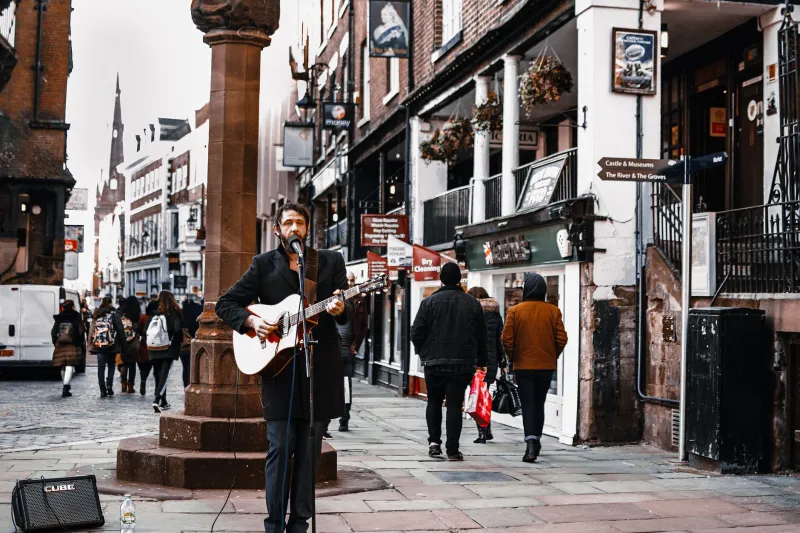
Five Bucks and a Mic: Inside the Weeknight Ritual That's Holding Neighborhoods Together
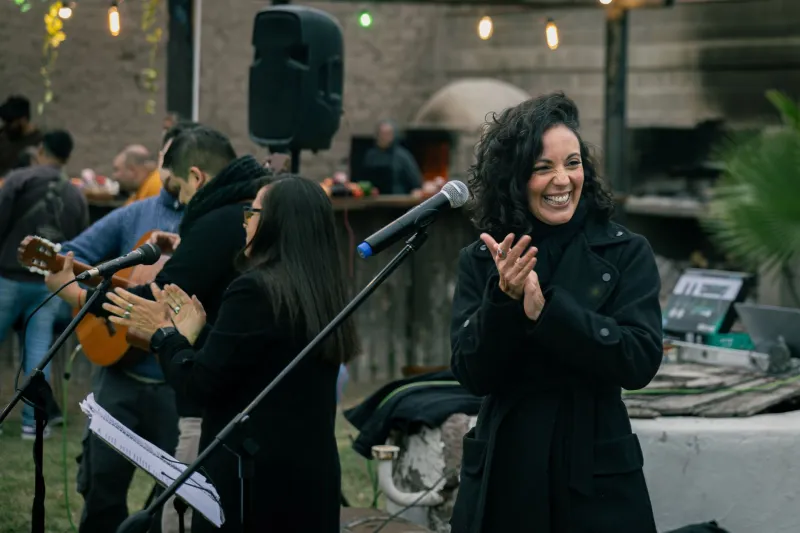
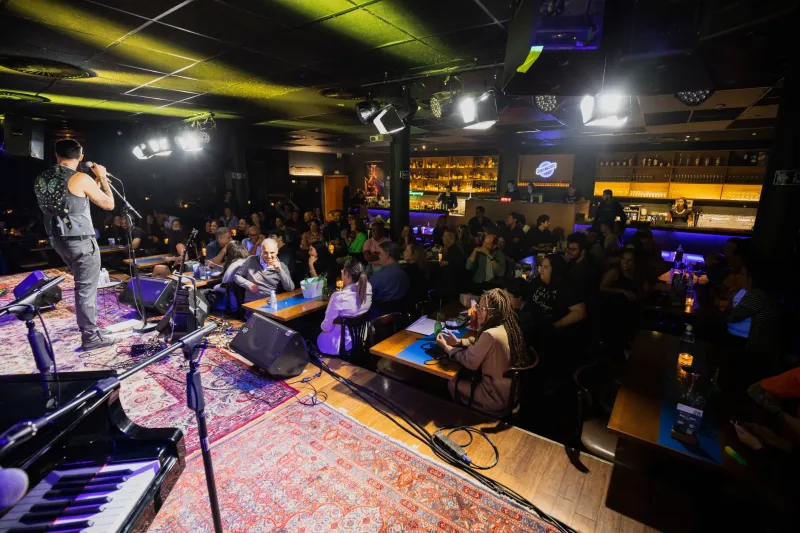
There's a moment around 6:40 on a Tuesday evening when the café changes registers. The laptop crowd starts packing up, the chairs get angled toward the small corner stage, and somebody — always somebody — drags an extra folding chair from the back because tonight's sign-up list ran long.
The cover charge is five dollars. The latte is six. And for eleven bucks total, you get three hours of live music, poetry, stand-up, and the particular warmth of a room where everybody kind of knows everybody.
In an era when a concert ticket with fees runs north of $100 and even a casual dinner for two can clear eighty, the open mic might be the last genuinely democratic night out in American cities. It's also, quietly, doing something bigger: rebuilding the third places we keep getting told are disappearing.
Who Actually Shows Up at 6pm
Spend enough Tuesdays in the same café room and the cast becomes familiar. There's the retired teacher who does a killer fifteen minutes of observational comedy about HOA meetings. The software engineer who's been workshopping the same three-minute folk song for two years and just this month added a bridge. The nursing student who reads poems on her phone from the Notes app. The couple in their sixties who never perform, always sit at the same table by the window, and tip like they're at a jazz club.
This is the demographic nobody's polling: the after-work crowd that wants to be out among people but can't justify a $60 dinner or a midnight show. They come early because they have jobs in the morning. They order food because they haven't eaten since lunch. They stay because leaving feels rude when the barista — who is also the sound engineer, the emcee's partner, and occasionally a performer herself — remembers their order.
The 6pm start time isn't an accident. It's designed around the reality that urban professionals will trade a happy hour for something more interesting, but only if they're home by nine.
The Economics of a Five-Dollar Door
Here's the math that makes the whole thing work, and it's worth understanding because it's more fragile than it looks.
A five-dollar cover with forty attendees grosses $200. In most café arrangements, that pot gets split between performers, split again with the venue, or — at the healthiest open mics — pooled into a tip jar that gets distributed by drawing names from the sign-up sheet. Nobody's getting rich. The guitar player might walk with thirty bucks and two coffees.
But the venue isn't really making its money at the door. It's making it at the counter. A room of forty people over three hours buys drinks. They buy the soup special. They come back next week. The open mic isn't the product — it's the reason the product sells, week after week, on what would otherwise be the slowest evening of the café's calendar.
For performers, the value is different but real. It's a low-stakes room to test new material, a place to meet the other musicians in town, and — increasingly — a scouting ground. Bookers for better-paying rooms around town show up at open mics the way baseball scouts used to show up at high school games.
How Regulars Become Infrastructure
Sociologists have a term for the people who hold casual community spaces together: keymakers. They're not officially in charge, but they're the ones who welcome the nervous first-timer, who keep the sign-up sheet moving, who text the host when the feature act cancels at 4pm.
Every thriving open mic has them, and they can't be hired. They accumulate. A regular attends for a month, starts saving a seat for a friend, learns the names of the baristas, and eventually becomes the person a newcomer asks, "Is it okay if I go up even though I've never done this?"
That's the quiet miracle of the format. Unlike a bar with a DJ or a ticketed show, the open mic has a built-in on-ramp for participation. You don't need to know anyone. You need five dollars and a willingness to write your name on a sheet of paper. Within a month, you have a table. Within a season, you have a community.
Compare that to the alternatives on offer: third places that cost money by the hour (coworking spaces), third places that cost money by the drink (bars), and third places that cost nothing but demand nothing either (the library, lovely as it is). The open mic sits in a rare middle — cheap, warm, and participatory.
Why This Moment Matters
The research on loneliness in America keeps getting worse, and the closures keep making headlines: music venues folding, neighborhood bars thinning out, bookstores going quiet. But the story rarely told is the one happening in the rooms that survived — often because they found a ritual.
Trivia night was the old reliable. The open mic is the new one, and it has an advantage trivia never did: it produces culture instead of just consuming it. The songs debuted on a Tuesday at a coffee shop end up on streaming. The comedian who bombed politely in front of forty people eating banana bread headlines a club eighteen months later. The room is small, but the pipeline is real.
So the next time you see a hand-lettered sign for a weeknight open mic — five bucks, sign-ups at six — understand what you're actually looking at. It's not just entertainment. It's a neighborhood practicing being a neighborhood, one five-dollar cover at a time.
Bring cash. Tip the jar. Stay for the second half.
That's the whole civic instruction manual.