From Espresso Shots to Encore Calls: Why the Café Stage Is Having Its Moment

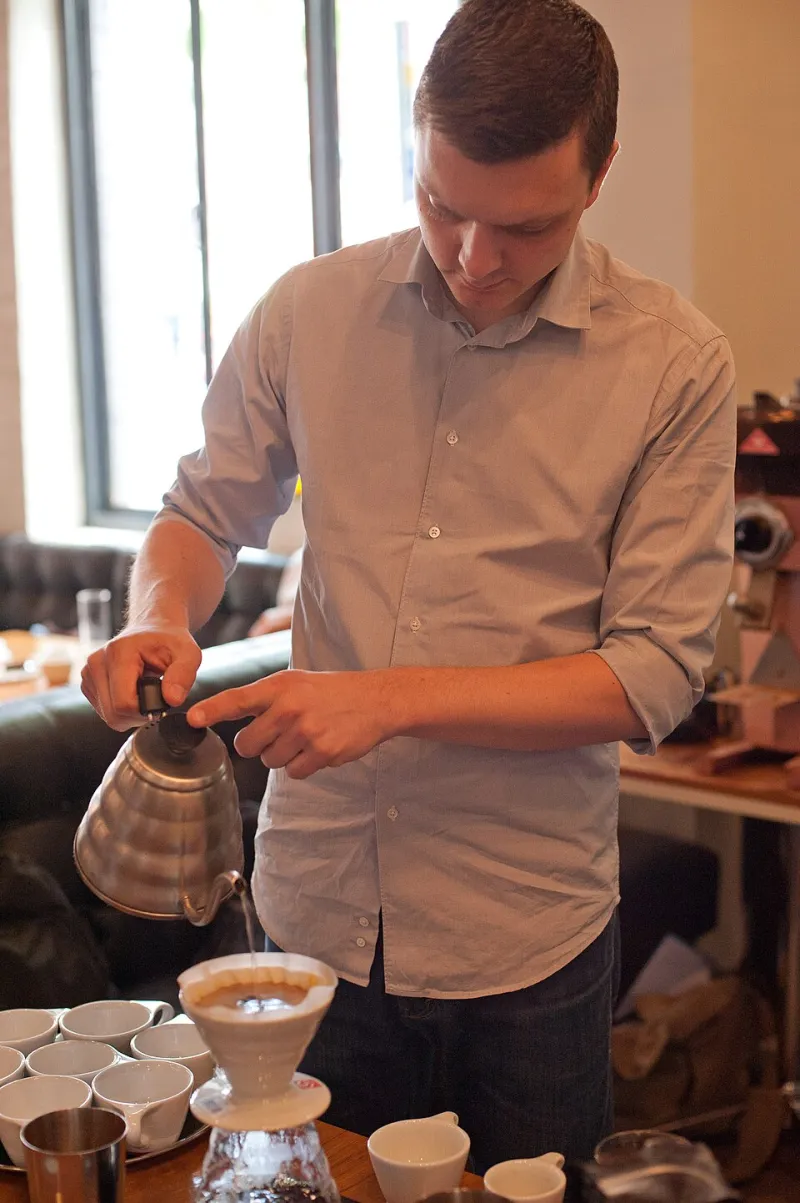
Photo: Rasheedhrasheed, CC BY-SA 4.0, via Wikimedia Commons
Something is quietly reshaping the American live music scene, and it smells like freshly ground coffee. Walk into the right café on a Friday evening in Chicago, Nashville, or Portland, and you might find yourself sipping a perfectly pulled cortado while a three-piece jazz ensemble sets up six feet from your table. No velvet rope. No $15 beer minimum. Just good music, great coffee, and a room full of people who actually want to be there.
The café-as-concert-venue trend has been building for years, but it has recently hit a kind of critical mass that's hard to ignore. Urban professionals—tired of the noise, expense, and impersonal scale of traditional venues—are increasingly turning to neighborhood coffee shops as their go-to spots for discovering new artists. And savvy café owners are meeting that demand head-on.
Why Bars and Concert Halls Are Losing Ground
Let's be honest: the traditional live music experience has some friction. Parking is a nightmare. Drinks are expensive. The crowd can be unpredictable. And unless you're front row, you're often watching the show on a screen above the bar. For a lot of people—especially those in their late 20s through 40s who have jobs to get to the next morning—that experience has started to feel more exhausting than exciting.
Cafés offer a genuinely different proposition. The environment is inherently more intimate. You're sitting down. You can actually have a conversation between sets. The person next to you might be a regular who just happens to know the bassist. That kind of low-stakes accessibility is exactly what a growing segment of music fans is craving.
There's also the alcohol-free angle, which shouldn't be underestimated. Not everyone wants their live music experience tied to drinking. Coffee shops offer a natural alternative—a social anchor that doesn't require a buzz to enjoy.
The Economics of the Café Stage
For café owners, adding live entertainment isn't just a cultural decision—it's increasingly a smart business one. A weekend evening performance can turn a slow 7–9 PM window into a full house. Cover charges (typically ranging from $5 to $20 at café venues) add a revenue stream that doesn't depend on table turnover. And the halo effect is real: venues known for good music build loyal communities that keep coming back even on quiet Tuesday mornings.
Of course, it's not without challenges. Acoustics in a space designed for conversation aren't always ideal. Booking talent requires time and relationships. And there's a delicate balance between creating an energetic atmosphere and maintaining the kind of low-key vibe that makes cafés appealing in the first place.
The venues that have cracked this code tend to share a few common traits: intentional room design, a curated booking philosophy, and a staff that genuinely cares about both the coffee and the culture.
Venues Getting It Right
Across the US, a handful of spots have become genuine models for the café-concert hybrid.
In Seattle, places like Caffe Ladro and Vermillion have long blended art and coffee culture, hosting everything from acoustic sets to gallery openings that double as listening parties. The Pacific Northwest's deep appreciation for both craft beverages and independent music makes it fertile ground.
In New York City, spots in Brooklyn and the East Village have carved out reputations as discovery engines for emerging artists. The intimate scale—sometimes just 40 or 50 seats—creates a word-of-mouth ecosystem where a great performance on a Thursday night becomes the thing everyone's talking about by the weekend.
Austin, already a live music institution, has seen its café scene evolve to include more structured performance programming. Some spots run weekly residencies, giving artists a reliable platform while giving regulars a reason to make it a standing date.
And in Chicago, the blend of jazz heritage and a thriving independent coffee culture has produced some genuinely exciting hybrid venues where a single origin Ethiopian pour-over and a live saxophone performance feel completely natural together.
What Artists Get Out of It
For musicians—especially those in the early-to-mid stages of building an audience—café venues offer something invaluable: proximity. Playing six feet from your listeners is a fundamentally different experience than performing on a raised stage in a dark room. You can read the room in real time. You can have actual conversations after the set. You can build a fanbase that feels personal rather than transactional.
Many artists also appreciate that café audiences tend to be genuinely attentive. People aren't there to get drunk and talk over the music. They came specifically for the experience, which makes for a more engaged, appreciative crowd.
The pay structure varies—some venues offer a door split, others a flat fee, and some rely on tip jars and merch—but the trade-off in exposure and community connection often makes it worthwhile, particularly for local and regional acts.
The Community Dimension
Perhaps the most underappreciated aspect of the café concert trend is what it does for neighborhoods. Live music has always been a community-building force, but when it's embedded in a space people already use daily, that effect amplifies. The café becomes a gathering point—a place with a personality, a history, a roster of artists who feel like neighbors.
That's exactly the vision at the heart of what we're building here at Live Café 385. The idea that great coffee and compelling live performance aren't separate experiences—they're complementary ones. A well-crafted drink in hand, a talented artist on stage, and a room full of people who showed up because they wanted something real. That's not a trend. That's a community.
The café concert isn't replacing the arena or the dive bar. It's filling a gap those spaces never quite addressed—the desire for culture that's accessible, intimate, and genuinely part of everyday life. And as more venues figure out how to do it well, that gap is getting a lot more interesting to inhabit.