Steam, Strings, and Spotify: How the Coffee Shop Stage Became the New Radio Station
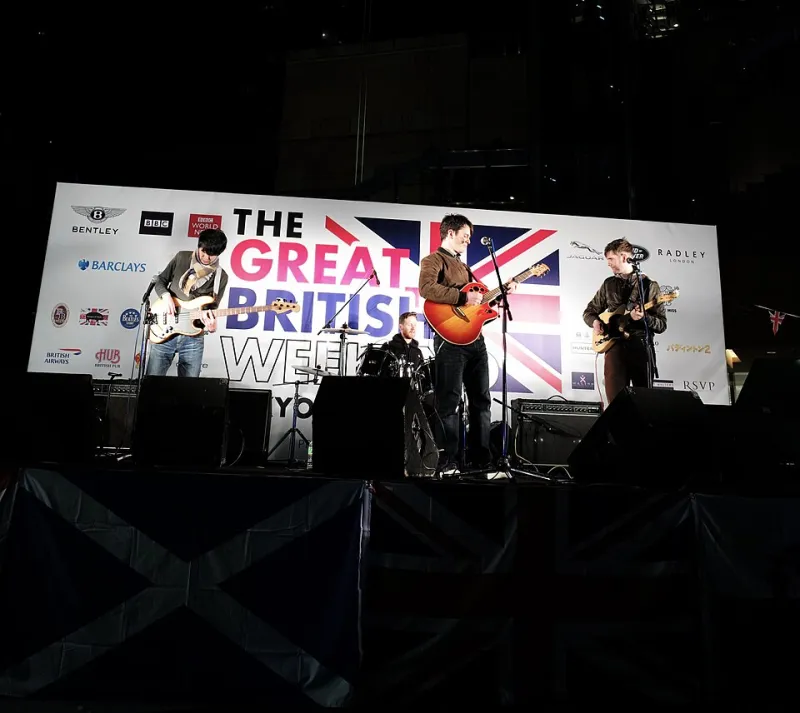
Photo: Minikimmy, CC BY-SA 4.0, via Wikimedia Commons
There's a moment that keeps repeating itself across coffee venues in cities like Nashville, Portland, Austin, and Brooklyn. An unknown singer-songwriter finishes a Thursday night set to maybe forty people nursing lattes and flat whites. Someone in that room — a Spotify playlist curator, a local music blogger, a sync licensing scout — pulls out their phone and adds the artist on the spot. Within three weeks, the track is on a mid-size editorial playlist. Within six, the streaming numbers look nothing like they did before that Thursday.
This is not a fluke. It's a pattern. And it's reshaping how independent musicians think about their first real break.
The Room Where It Happens (And It's Not a Stadium)
The traditional path to radio exposure involved a publicist, a radio promoter, and a budget that most independent artists simply don't have. College radio helped for a while, and it still does, but the gatekeepers have multiplied and the attention has fragmented. What nobody fully anticipated was that the fragmentation itself would create opportunity — specifically, the opportunity hiding inside intimate live venues where the audience-to-artist ratio is close enough that real human connections actually form.
"I played a café in East Nashville to like thirty-five people," says Mara Tillson, an indie folk artist who released her debut EP last year. "One of those people ran a playlist called 'Sunday Morning Drive' with about 80,000 followers. She messaged me that same night. That one placement changed my monthly listeners more than anything I'd done in two years of releasing music online."
Tillson's story isn't unique. What makes it instructive is the why behind it. In a coffee venue, the performance is unavoidable. There's no algorithm deciding whether to serve it to someone. There's no skip button. The person in row two, three tables back — they're hearing you whether they planned to or not. And when the music is good, that accidental discovery carries a particular kind of emotional weight that a curated feed rarely replicates.
What the Data Is Starting to Show
Streaming analytics platform Chartmetric has documented what industry insiders have been noticing anecdotally: artists who develop consistent live presences in smaller, community-oriented venues tend to show more durable streaming growth than those who rely primarily on cold playlist pitching. The engagement metrics — saves, repeat listens, profile follows — look different. More organic. More sticky.
Café venues specifically seem to punch above their weight in this regard. Music curators have noted that the demographic overlap between regular coffee shop patrons and active playlist followers on platforms like Spotify and Apple Music is striking. Urban professionals, the kind who spend real time in café environments, are disproportionately represented among users who actively curate and share music rather than just passively consuming algorithm-generated feeds.
"My regulars are tastemakers," says Jordan Reyes, who books music at a live café venue in Denver. "I don't mean that in a pretentious way. I mean they're the people who text their friends about a band they just heard. They share Reels. They add things to their playlists and their playlists have actual followers. When an artist plays well in this room, it moves."
Reyes has started tracking what he calls the "post-set bump" — the measurable spike in an artist's streaming numbers in the 48 to 72 hours following a café performance. He's seen bumps ranging from 15 percent to, in one case, over 300 percent following a set that got clipped and shared on Instagram by three separate audience members.
The Cappuccino Connection: Industry Scouts in Unexpected Places
What's changed in the last several years is who's actually sitting in those café seats. The consolidation of the music industry, combined with the rise of remote and hybrid work, has pushed a lot of people in adjacent creative industries — music supervisors, podcast producers, independent label A&R scouts, sync licensing consultants — into the same third spaces that everyone else retreated to after the pandemic reshuffled American work culture.
They're not always there to scout. Sometimes they're just there for the oat milk cortado and decent Wi-Fi. But the music finds them anyway.
"I wasn't looking for anyone that night," admits Chicago-based music supervisor Dana Kowalski, who places songs in television and streaming productions. "I was finishing a cut list for a client. This duo started playing and I literally stopped typing. I had them in a show within four months. That's not how I usually work, but that's what happened."
Kowalski's experience points to something the traditional industry pitch process often fails to replicate: the element of genuine surprise. When a musician walks into a label office or submits through a formal channel, the evaluator is already in assessment mode, defenses up, criteria checklist running. In a café, the guard is down. The coffee is good. The vibe is relaxed. The music arrives without a pitch deck.
What Artists Are Actually Doing to Maximize the Moment
Smart emerging artists have started treating café bookings not as filler gigs between "real" shows but as strategic career moves in their own right. That means playing well, obviously. But it also means a few other things.
First, they're making it easy for curious listeners to find them immediately. QR codes on a small card at the edge of the stage, a clean and memorable artist handle repeated once or twice during the set, a link in bio that goes somewhere useful. "If someone has to work to find you after they just heard you play," Tillson says, "you've already lost half of them."
Second, they're engaging with the room between songs in a way that a larger venue wouldn't allow. The café stage is one of the few performance contexts where a brief, genuine conversation with the audience doesn't break the spell — it deepens it. Artists who use that intimacy well tend to generate the kind of personal connection that translates into the most valuable streaming behavior: the playlist add that comes with a personal note, the share that includes an actual recommendation.
Third, they're showing up consistently. A single great café set can create a moment. A residency — even an informal one — builds a community. And communities, in 2025, are the closest thing to a sustainable independent music career that most artists can realistically construct.
Why the Café Stage Keeps Winning
There's something almost counterintuitive about the fact that one of the most powerful launching pads in the current music landscape is also one of the smallest and most unglamorous. No stage lighting rigs. No green room. No rider beyond whatever the barista is willing to comp. And yet the intimacy, the accidental audience, the demographic sweet spot, and the increasingly blurred line between music fan and music industry professional have conspired to make the café stage genuinely powerful.
For artists willing to take it seriously, the coffee venue isn't a stepping stone to something better. It might already be the thing itself — the place where a career starts to feel real, one carefully poured cup at a time.