Cracked Plaster and Perfect Sound: What Concert Halls Are Finally Stealing From Coffee Shops
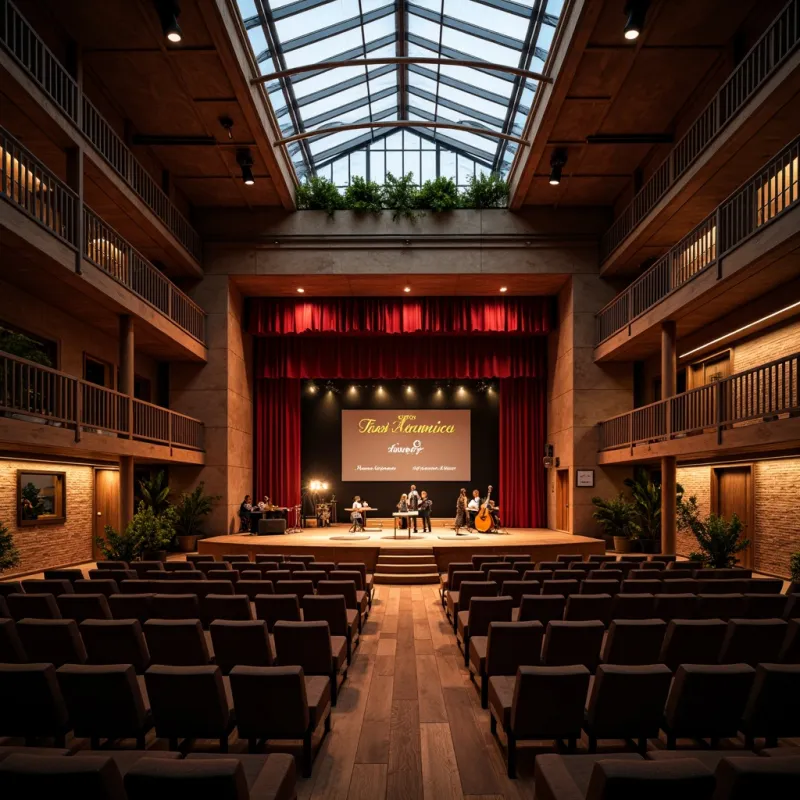
Photo: intimate café live music performance exposed brick acoustic, via gstatic1.promeai.pro
There's a moment that happens at almost every live performance in a small café. The musician finishes a song, the espresso machine takes a beat, and the room holds the last note just a half-second longer than it should. It feels like magic. It isn't. It's physics — and it's the kind of physics that some of the most expensive concert venues in the country are still struggling to replicate.
Acoustic engineers, venue designers, and musicians themselves have started paying closer attention to what's happening inside intimate coffee spaces. What they're finding is quietly reshaping how performance venues get built.
The Problem With Perfection
Professionally designed concert halls are, in a very real sense, too good at their jobs. They're engineered to control sound with near-surgical precision — angled walls to redirect reflections, suspended acoustic panels to absorb excess reverberation, and carefully calculated room volumes that keep every frequency in check. The result is technically flawless. It's also, as many performers will tell you off the record, kind of sterile.
"When everything is controlled, you lose the conversation between the room and the music," says Marcus Delray, an acoustic consultant based in Chicago who has worked on both large-venue retrofits and boutique hospitality spaces. "A room that fights back a little — one that has its own voice — actually adds something to a performance. The musician responds to it. The audience feels it."
That 'fighting back' is exactly what a well-worn coffee shop does naturally.
Exposed Brick Isn't Just Decor
Walk into most independent cafés in any American city — think the kind of place in a converted warehouse in Brooklyn, or a 1920s storefront in Chicago's Wicker Park, or a repurposed train depot in Nashville — and you'll notice a common visual language: exposed brick, raw wood, high ceilings with visible ductwork, and windows that don't quite seal all the way.
Every single one of those elements is doing acoustic work.
Brick is a diffuser. Its irregular surface texture scatters sound waves in multiple directions rather than bouncing them back in a single clean reflection. That scattering creates what engineers call a 'diffuse sound field,' where sound seems to come from everywhere at once rather than from a single point source. For a live performance, that means a guitarist in the corner feels present throughout the room, not just audible to the three tables directly in front of the stage.
Wood floors add warmth to lower frequencies — the frequencies that give a bass line its body and a vocalist's chest voice its resonance. Concrete and tile, by contrast, reflect high frequencies aggressively, which is why they sound great in a bathroom and brutal in a music venue.
"The materials that define the visual aesthetic of a classic American café are almost accidentally ideal for acoustic performance," says Priya Nandakumar, a sound designer who splits her time between touring production work and permanent venue installations. "If you handed me a blank room and said design something for intimate live music, I'd probably spec something pretty close to what you already find in a 100-year-old coffee shop."
Ceiling Height and the Sweet Spot
Here's where it gets counterintuitive. Most people assume that taller ceilings equal better sound. Cathedrals. Concert halls. Arenas. The logic seems obvious.
But for intimate performance — a solo acoustic act, a jazz trio, a spoken word night — ceiling height matters less than ceiling irregularity. A café with a fourteen-foot ceiling that has exposed beams, pendant lights, and a few acoustic tiles mixed in with drywall is going to perform better than a purpose-built room with a twenty-foot flat ceiling and no variation.
Those interruptions — the beams, the hanging fixtures, the structural inconsistencies — break up standing waves. Standing waves are the enemy of good room sound. They're the reason certain seats in certain venues have muddy bass and others sound thin. Irregularity is the cure, and old buildings are full of it.
The Ambient Noise Argument
This one surprises people every time. Café ambient noise — the hiss of the steam wand, the low murmur of conversation, the occasional scrape of a chair — actually helps live performance rather than hurting it.
The mechanism is called auditory masking, and it works in the performer's favor. Low-level ambient noise raises the floor of what the audience is hearing, which means the dynamic range of the performance — the difference between the quietest and loudest moments — gets compressed slightly. In a dead-silent room, a performer's quiet moments feel exposed and fragile. In a room with gentle ambient noise, those same quiet moments feel intimate and intentional.
"I've played rooms that were completely silent and rooms with a little life in them," says Tomas Reyes, a fingerstyle guitarist who regularly performs at café venues across the Southwest. "The quiet rooms make me nervous. The ones with some ambient warmth make me feel like the room is on my side."
Venue designers are starting to take note. A handful of new performance spaces in cities like Austin, Portland, and Philadelphia have deliberately incorporated what designers are calling 'managed ambient environments' — subtle background sound systems that introduce low-level acoustic texture into the room even before the audience arrives.
What the Fancy Halls Are Borrowing
The shift is already happening. Several major venue renovation projects in the US have brought in hospitality designers alongside traditional acoustic engineers for the first time. The goal isn't to make concert halls feel like coffee shops — it's to borrow specific elements that the café world stumbled into by accident.
Diffuse surface materials. Mixed ceiling heights. Soft furnishings that absorb mid-range frequencies the way upholstered café chairs do. Even the strategic placement of bar elements along the back wall, which creates an acoustic barrier that keeps crowd noise from collapsing back onto the stage.
Nandakumar laughs when she talks about it. "We're essentially reverse-engineering things that café owners never thought twice about. Nobody opened a coffee shop and said, 'I'm going to optimize the diffusion characteristics of this space.' They just put in the brick because it looked good. And now we're writing papers about it."
The Takeaway for Anyone Who Loves Live Music
None of this means purpose-built concert halls are going away. For orchestras, large-scale productions, and amplified shows with serious production requirements, they remain the right tool. But for the kind of live music that feels genuinely connected — the kind where you can see the performer's hands and feel the room breathe with the music — the neighborhood café has been quietly winning for decades.
Next time you're settled into a corner seat with a well-made pour-over and a local musician setting up in the corner, take a second to notice the room itself. The brick. The floor. The low ceiling. The gentle hum of the place doing what it does.
That's not atmosphere. That's acoustics. And it took the professionals a while to catch up.