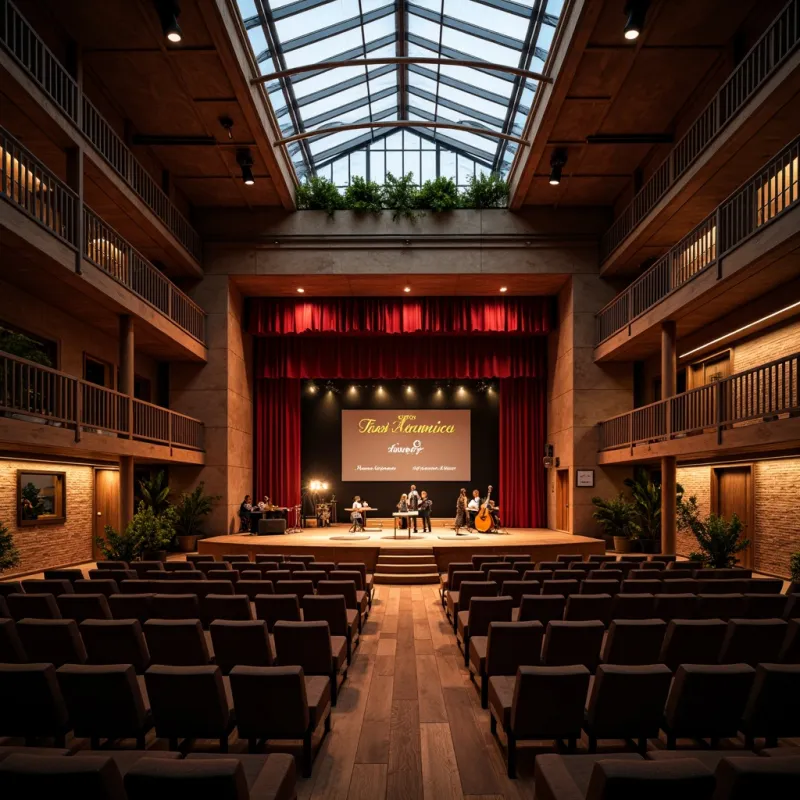
Why Your Favorite Café Sounds Like a Concert Hall (And the One Down the Street Sounds Like a Fishbowl)
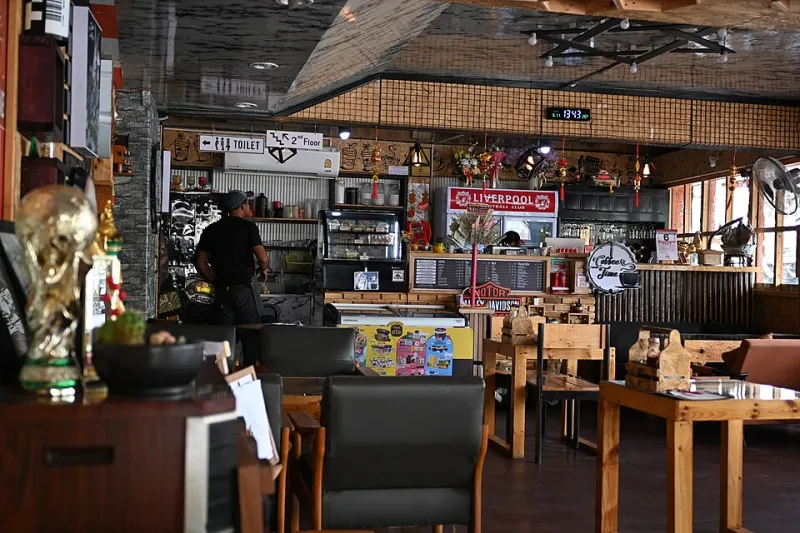
Photo: PattayaPatrol, CC BY-SA 4.0, via Wikimedia Commons
You've been there. You settle into a café for a live set, coffee in hand, genuinely excited — and then the performer starts, and something's just off. The vocals are muddy. The guitar sounds like it's bouncing off the inside of a soup can. You find yourself leaning toward your friend just to hold a conversation, and by the second song you're already mentally checking out.
Now flip that. You've also been in a room — maybe a place like Live Café 385 — where a single vocalist with an acoustic guitar fills the space like warm light. Every note lands clean. The music wraps around the room without swallowing it. You can still hear your espresso order being called. The whole thing just works.
What's the actual difference? It's not always budget. It's not always equipment. A lot of the time, it comes down to acoustics — and specifically, how well a venue has solved what sound engineers half-jokingly call the Café Intimacy Problem.
The Problem With Pretty Rooms
Cafés are not built for sound. They're built for aesthetics, foot traffic, and coffee throughput. That means exposed brick, high ceilings, concrete floors, glass storefronts, and hard wood surfaces — all of which are acoustic nightmares.
Every one of those surfaces reflects sound. In a large concert hall, that reflection is carefully engineered to create resonance and depth. In a 900-square-foot café with 12-foot ceilings and a espresso machine running in the corner, those same reflections turn into a chaotic mess of overlapping sound waves. Sound engineers call this "flutter echo" — and once you know the term, you'll hear it everywhere.
"The irony is that the spaces that look the most interesting visually tend to be the hardest to work with acoustically," says one independent sound engineer who has retrofitted live sound systems into venues across the mid-Atlantic. "Exposed brick is gorgeous. It's also basically a giant mirror for sound waves."
Add in the ambient noise of a working café — the hiss of a steam wand, the grinding of beans, the low hum of HVAC, the constant shuffle of chairs — and you've got a genuinely complex acoustic environment that most venue owners underestimate until the first bad show.
Build It or Fix It: Two Very Different Philosophies
When it comes to solving the acoustic puzzle, venue owners generally land in one of two camps: those who bake acoustic treatment into the design from the start, and those who try to fix it after the fact.
Building acoustics in from scratch is obviously the cleaner solution. Strategic placement of soft materials — upholstered seating, heavy curtains, acoustic panels disguised as artwork, even carefully positioned bookshelves — can dramatically reduce unwanted reflections before a single speaker is installed. Some venues go further, commissioning custom ceiling baffles or investing in floating floors that absorb low-frequency rumble.
But most café-turned-venues don't have that luxury. They're working with existing spaces, existing leases, and existing landlords who may not love the idea of drilling into original brick. That's where the retrofit conversation gets creative.
"You'd be surprised what a few well-placed rugs and some heavy drapes can do," notes one venue consultant who has worked with independent music spaces across the Southeast. "It's not glamorous, but fabric absorbs mid-range frequencies really effectively. A lot of venues spend thousands on gear when what they actually needed was a $200 curtain rod."
The flip side is that over-dampening a room strips it of all its life. Dead acoustics — the kind you find in a recording studio isolation booth — feel suffocating in a live setting. The goal is balance: enough absorption to kill the chaos, enough reflection to keep the music feeling alive and present.
Speaker Placement Changes Everything
Even in a perfectly treated room, poor speaker placement can undo all the hard work. This is especially true in café environments, where the speaker's job is more nuanced than it would be in a traditional music venue.
In a concert hall, the goal is projection — push sound to the back of the room. In a café, you're often trying to do the opposite: keep the sound contained to the performance area without letting it bleed into the workspace or the coffee bar. That requires a fundamentally different approach to speaker positioning, output levels, and directional coverage.
Near-field monitors aimed directly at the audience rather than at the room, combined with modest subwoofer placement and careful EQ work, can create a listening sweet spot that feels immersive for people at tables near the stage while remaining genuinely conversational for someone working near the window. It's a balancing act that rewards patience and good ears.
The Variable Nobody Talks About: Humidity
Here's something that surprises most people: the air inside a café is not acoustically neutral. High humidity — common in any space running multiple espresso machines and steam wands through a long Saturday shift — actually affects how sound travels through a room.
Humid air absorbs high-frequency sound more efficiently than dry air. That means a venue that sounds bright and clear during a Tuesday afternoon sound check might feel warmer and slightly duller during a packed Friday night show when the steam wands have been running for six hours. It's a subtle difference, but experienced sound engineers account for it — often by bumping high-frequency EQ slightly during busier sets.
Temperature fluctuations matter too. A café that swings between cool and warm throughout the day experiences slight changes in air density that affect the speed of sound. Again, subtle — but in a small, intimate room where every detail is audible, subtle adds up.
What Great Acoustic Design Actually Feels Like
The benchmark for getting it right isn't technical — it's emotional. When café acoustics work, you stop thinking about the sound and start thinking about the music. The performer feels close even if they're across the room. Conversation doesn't feel like a battle. The coffee tastes better, somehow, because nothing is fighting for your attention.
That's the experience Live Café 385 is built around — a space where the coffee and the culture reinforce each other rather than compete. Where a singer-songwriter can hold a room of urban professionals without blowing out the vibe for the person in the corner trying to finish a deck before Monday.
Getting there isn't magic. It's material choices, speaker angles, humidity awareness, and a willingness to keep adjusting until the room sounds the way it feels. But when it comes together? You stop noticing the acoustics entirely.
And that's exactly the point.