The Pastry Case Is Lying to You: A Field Guide to Café Desserts That Won't Blow Up Your Day
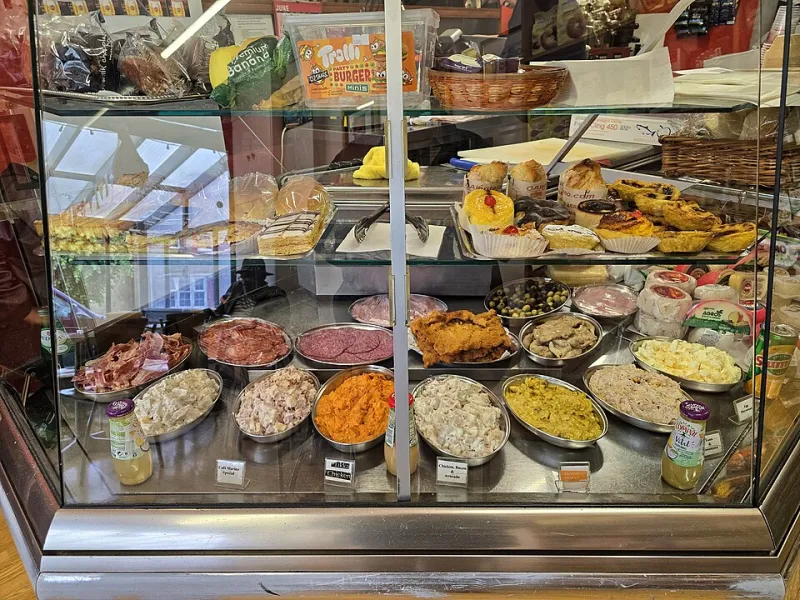
Photo: Acabashi, CC BY-SA 4.0, via Wikimedia Commons
There's a moment of optimism that happens at every café counter in America. You've ordered your flat white, you're feeling reasonably virtuous, and then your eyes drift left — to the glass case. Scones glistening with glaze. A slab of banana bread the size of a brick. A lemon bar sitting there like it's harmless.
Here's the uncomfortable truth: that pastry case is the most nutritionally opaque corner of the American food scene. No labels, no calorie counts in most independent shops, and portion sizes that have quietly ballooned over the past decade. We spent a few weeks asking bakeries and coffee shops across the country for their numbers — or estimating from standard recipes when they wouldn't share — and what we found should change how you order.
The Worst Offenders, Ranked
Let's start with the ones quietly wrecking your afternoon. These are the usual suspects, and some of them genuinely surprised us:
1. The muffin (blueberry, chocolate chip, take your pick). The café muffin is a cupcake in denial. A typical bakery-case muffin runs 400 to 500 calories, with the big ones — the ones that barely fit in the wrapper — pushing 600. The blueberry in the batter doesn't earn it a health halo.
2. Banana bread. It has fruit in the name, and that's doing all the work. A standard thick slice lands between 400 and 500 calories, most of it from oil and sugar. You are not eating bananas. You are eating cake with a publicist.
3. The giant cinnamon roll. The frosted, palm-sized ones at coffee chains and their indie imitators? Anywhere from 500 to well over 800 calories. That's not a treat — that's lunch wearing a cinnamon costume.
4. Scones. The dry, crumbly texture fools people into thinking they're light. They are not. Butter is what makes them crumble. Expect 350 to 500 calories for a classic scone, more with a glaze.
5. The lemon bar. Small, cheerful, seemingly innocent. A standard 3-inch bar runs 300 to 400 calories, thanks to a shortbread base and a filling that's mostly sugar and eggs.
The Genuinely Smart Orders
Before you swear off dessert forever — which, let's be honest, nobody at Live Café 385 is going to recommend — here's the good news. Some case staples deliver real satisfaction for a fraction of the damage:
Biscotti. Around 120 to 150 calories for a classic almond biscotti. It's designed to be dunked in coffee, it lasts fifteen minutes instead of ninety seconds, and it actually complements an espresso rather than competing with it. The best calorie-to-pleasure ratio in the case, full stop.
The small cookie. A modest chocolate chip or oatmeal cookie — think two to three inches across — comes in around 150 to 200 calories. The trick is the word small. The café cookie the size of your face is 400+ easy.
Madeleines and mini pastries. French-style cases get this right: a madeleine is 80 to 110 calories. A canelé similar. Portion control, built into the recipe.
Savory options. If you're actually hungry and not just craving, a small quiche slice or a piece of fougasse often beats a sweet pastry on both calories and staying power.
What the Bakers Told Us
We talked to a handful of working pastry chefs who supply café cases, and their advice was refreshingly consistent.
"Nobody's muffin needs to be six inches tall," one Portland-based baker told us. "We make mini versions of everything now because half our customers are buying it to feel good, not to eat 600 calories before a meeting."
A few practical takeaways from the people behind the glass:
- Cut it in half, on purpose. Ask for a knife, eat half, wrap the rest. A 500-calorie scone becomes a 250-calorie treat that you also get to look forward to later.
- Watch the drink math. A 16-oz latte with whole milk runs about 190 calories; a flavored mocha with whipped cream can hit 400+. Pair the pastry with a smaller, drier drink — a cappuccino, an Americano, a cortado — and the whole order stays reasonable.
- Timing matters more than the item. The bakers' consensus: a pastry is fine at 8 a.m. when you have the whole day to use the energy. At 3 p.m., it's dessert, and you should treat it like dessert.
The Real Takeaway
The pastry case isn't evil. It's just unmarked — and unmarked food in America always trends bigger and sweeter than you'd guess. The fix isn't abstinence; it's information. Order the biscotti with your espresso. Split the cinnamon roll. Choose the small cookie over the big muffin.
Because the whole point of the café — the coffee, the music, the corner table, the people-watching — was never really the pastry. It's the two hours you get to sit there. Order something that lets you stay for both sets.