Pulling Shots and Playing Sets: The New Financial Blueprint for Working Musicians
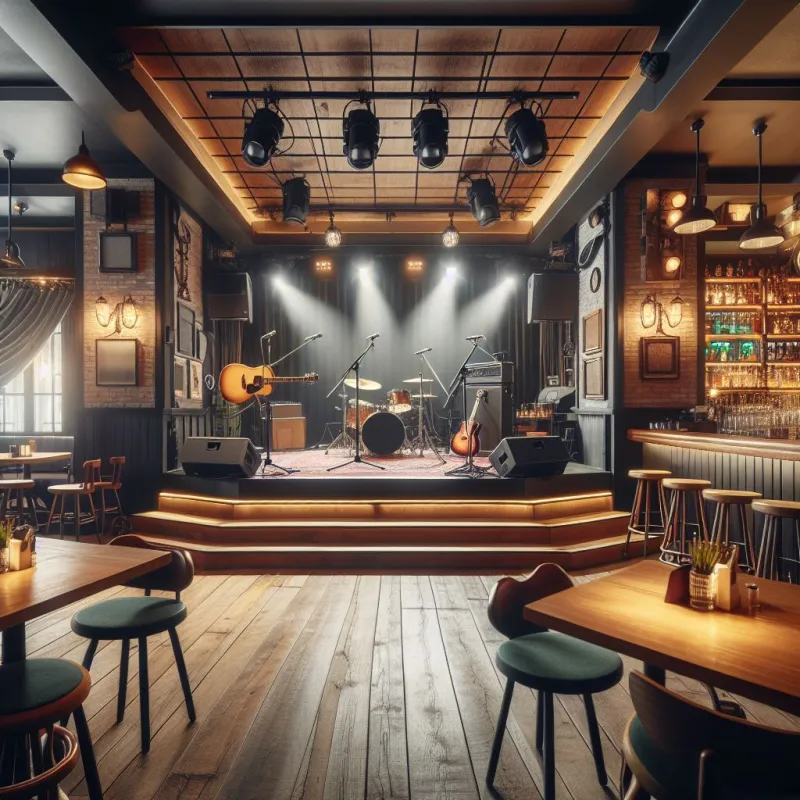
Photo: musician barista coffee shop performance stage urban café, via i.pinimg.com
For decades, the image of the struggling musician meant a cramped apartment, a day job with zero connection to the craft, and gigs that paid in exposure rather than rent. That story is getting a serious rewrite — and a lot of the new chapters are being drafted inside live café venues scattered across American cities.
What's emerging isn't just a lifestyle compromise. It's something closer to a genuine economic model, one that blends service industry income with performance revenue in ways that are surprisingly sustainable and, for many artists, creatively freeing.
The Old Math Wasn't Adding Up
The traditional path for an emerging musician looked something like this: play small bars for door splits, hope a bigger venue noticed, work a completely unrelated job to cover the gaps, and treat the whole thing as a temporary sacrifice on the road to something bigger. The problem was that "something bigger" arrived for very few people, and the gap years turned into gap decades.
Bar gigs, even decent ones, come with real friction. Load-in times, late nights, sound systems that vary wildly in quality, and audiences who are often there for the drinks rather than the music. The economics are similarly unpredictable — a Thursday night door split at a mid-sized bar might net an artist $40 on a slow week or $180 on a good one. Neither figure pays rent in Chicago, Austin, or Brooklyn.
Café venues are operating on different math entirely.
What Café Gigs Actually Pay
The compensation structure at live café venues tends to be more consistent than bar bookings, even if individual payouts are sometimes smaller. Many established café performance spaces offer flat fees rather than door splits, which means an artist knows what they're walking away with before they tune their first string. For a two-hour weekend set at a venue like Live Café 385, flat fees in the $150–$350 range are common, and that's before tips, merchandise sales, and the kind of direct audience engagement that rarely happens at louder, more chaotic bar venues.
That predictability matters enormously when you're trying to build a monthly budget. Three café bookings a week — a realistic target for an artist with a growing local following — can generate somewhere between $1,800 and $4,000 a month in performance income alone. Stack that against part-time barista wages, and suddenly the math starts to look less like survival and more like a viable career architecture.
"I know exactly what my Tuesday and Friday sets are worth before I show up," says one Nashville-based singer-songwriter who also works morning shifts at a café venue in East Nashville. "That consistency changed everything about how I plan my life."
The Barista Role Isn't a Fallback — It's a Feature
Here's where the live café model diverges most sharply from the old struggling-artist template: the service work isn't incidental to the artistic career. It's structurally connected to it.
Musicians who work as baristas at the same venues where they perform aren't just clocking hours between gigs. They're building relationships with regulars, getting real-time feedback on what kinds of music land with different crowds, and developing a genuine stake in the venue's success. Venue owners, in turn, have strong incentives to book staff musicians because those artists already understand the room, the clientele, and the rhythms of the space.
This creates a feedback loop that benefits everyone. The musician gets more stage time and a more consistent income floor. The café gets performances that feel authentically tied to the venue rather than imported from a booking spreadsheet. And the audience gets something that feels less like a scheduled event and more like a natural extension of the space's personality.
A Different Kind of Hustle
It would be easy to romanticize this and ignore the real demands. Working a morning shift behind an espresso machine and then performing a two-hour evening set is physically taxing in ways that neither job is on its own. Voice care becomes a genuine occupational concern. Scheduling conflicts between shifts and bookings require constant negotiation. And for artists with more ambitious touring goals, the café model can sometimes feel like a ceiling rather than a launching pad.
But the artists building careers within this structure tend to talk about it differently than the exhausted bartender-musicians of previous generations. The exhaustion is real, but it comes with a sense of coherence that the old model rarely offered. The work and the art are happening in the same ecosystem rather than running on parallel, disconnected tracks.
"I'm not hiding my music from my coworkers or my boss," says one Brooklyn-based guitarist who splits time between café shifts and evening performances at several Manhattan venues. "They're literally the same people. That changes your whole relationship to both things."
What Cities Are Getting Right
The live café economy is flourishing most visibly in cities that have made room for hybrid venue licensing — places where a business can serve food and coffee, host live performances, and operate without the noise ordinance headaches that complicate late-night bar venues. Cities like Portland, Denver, Nashville, and certain Brooklyn neighborhoods have seen genuine clusters of these spaces emerge, and the artist communities around them have followed.
Urban planners and small business advocates are starting to pay attention. Live café venues occupy a unique economic niche: they're daytime businesses with evening revenue streams, which makes them more financially resilient than either a pure café or a pure performance venue would be on its own. That stability translates directly into more consistent booking schedules and, by extension, more reliable income for the artists they work with.
The Stereotype Is Losing Its Grip
The starving artist narrative has always been partly myth and partly self-fulfilling prophecy. When the only models available to emerging musicians involved years of financial precarity with no clear connection to long-term sustainability, many talented people simply opted out.
The live café model doesn't promise fame or a major label deal. What it offers instead is something arguably more useful at the early stages of a career: a way to keep playing, keep improving, and keep building an audience without burning through savings or burning out entirely. That's not a compromise. For a growing number of working artists across the US, it's the actual plan.
And increasingly, it's a plan that's working.