Shots, Sets, and Side Hustles: How Café Workers Are Turning Industry Access Into Serious Income
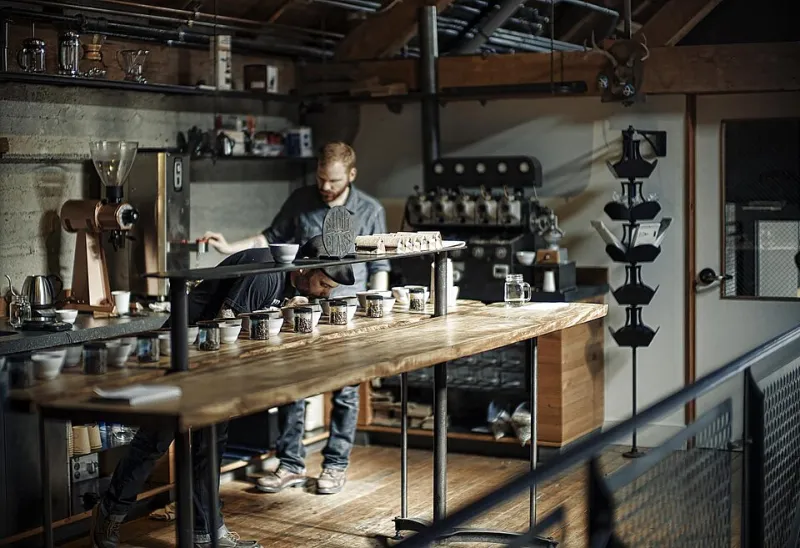
Photo: Christopher Michel, CC BY 2.0, via Wikimedia Commons
The Best Seat in the House Isn't at a Table
There's a moment that happens in live café venues that most customers never notice. The espresso machine goes quiet between sets, the applause fades, and while the audience is still buzzing from the performance, the barista behind the counter is already exchanging numbers with the bassist. Or scribbling down the name of a roaster someone mentioned during soundcheck. Or quietly noting that the merch table sold out of tote bags before the second set even started.
That moment — unremarkable to most, electric to the right person — is where a lot of small empires get started.
Across the country, baristas and live café staff are leveraging their position at the crossroads of coffee and culture to build side businesses that, in more than a few cases, have grown into six-figure operations. The access is built into the job. The rest is just hustle.
When the Day Job Is Actually Market Research
Consider what a barista at a busy live café actually knows by the end of a busy weekend. They know which artists drew the biggest crowds. They know what people ordered when they were excited versus when the room felt flat. They know which touring musicians are grinding it out on a shoestring and which ones have management that actually picks up the phone. They know what sold at the merch table and what sat there untouched all night.
That's not just coffee shop gossip. That's competitive intelligence.
Marcus, a former lead barista at a multi-stage café venue in Nashville, spent two years quietly absorbing all of it before launching a small-batch coffee roasting company that specifically markets to music venues and green rooms. His pitch practically wrote itself: he knew the touring circuit, he knew what artists drank before a show, and he had relationships with the buyers. His first year of wholesale revenue cleared $80,000. He still does the occasional shift behind the bar.
"The café gave me the network," he says. "I just figured out what to do with it."
The Artist Management Pipeline Nobody Talks About
Venue staff are often the first people to notice when a local act has something real. They watch the same musicians perform week after week. They see who brings back the same fans and who keeps pulling in new ones. They notice the artists who handle rejection gracefully and the ones who implode after a bad set. That kind of longitudinal observation is something most managers don't get until they've already signed someone.
Jamila started as a floor runner at a live café in Atlanta — taking orders, running tabs, helping with load-in. Over three years, she watched dozens of acts come through. When one acoustic duo kept filling the room without any real promotional push, she offered to help them book a small regional tour. That turned into a management agreement. That turned into a boutique agency representing six acts, two of which have since landed sync licensing deals.
Her office is now an actual office, not a café corner. But she still stops by her old venue every couple of weeks. "That place is basically my talent pipeline," she says, laughing. "I just don't clock in anymore."
Merch, Margins, and the Café Advantage
The merchandise angle is one that doesn't get enough attention. Live café environments create a low-pressure, high-impulse purchasing environment that traditional concert venues don't always replicate. Customers are sitting down, they're comfortable, they've had a good experience, and the artist they just heard is standing ten feet away. Conversion rates on merch in that setting can be surprisingly strong.
Several café staffers have recognized this and started offering merch production and fulfillment services directly to the artists they work alongside. One barista in Portland — who asked to keep things vague while his LLC is still getting off the ground — started screen-printing shirts for local acts out of his garage after noticing how many musicians were either selling subpar product or selling nothing at all. He now handles design, production, and table setup for eight regular acts. His café shifts pay the bills. The print shop is starting to pay for everything else.
The markup on a well-designed tee is real. The markup when you're already embedded in the venue and don't need to pitch cold? Even better.
Booking Agencies Born Behind the Bar
Booking is another area where café insiders have a structural advantage. Venue owners trust people they already know. Artists trust people who've watched them perform and treated them like humans rather than line items. When a longtime barista or floor manager decides to start connecting artists with venues, both sides of that equation are more likely to pick up the phone.
Derek spent five years at a live café in Chicago before launching a micro-booking agency focused exclusively on jazz and neo-soul acts in the Midwest. His first twelve clients came directly from his existing café relationships. His pitch to venues was simple: "You already know I understand what works in your room." His pitch to artists was equally direct: "I've watched you perform. I know where you should be playing."
In year one, his agency placed acts in over 60 shows across four states. He projects that number will double in year two.
The Ecosystem Nobody Built on Purpose
What's striking about all of these stories is that none of them are accidents, exactly, but none of them were master-planned either. The live café environment doesn't just serve coffee and host performances — it creates a dense, recurring network of creative and commercial relationships that compound over time. Workers who pay attention to that network, and who are willing to act on what they learn, find themselves holding cards that people outside the industry spend years trying to acquire.
The barista who becomes a roaster. The floor runner who becomes a manager. The shift lead who becomes a booking agent. These aren't career pivots so much as natural extensions of the position — the logical next move for someone who spent years at the exact center of where coffee culture and live culture meet.
The café gave them the room. They just decided to build something in it.
What It Actually Takes
None of this is passive. The workers who've turned café proximity into real business ventures are, almost universally, people who treated every shift like a networking event — not in a transactional way, but with genuine curiosity about the artists, the audience, and the mechanics of how it all worked. They asked questions. They offered help before anyone asked. They showed up consistently enough that when an opportunity materialized, they were the obvious person to call.
The access is the advantage. But the work is still the work.
If you're currently pulling shots at a live venue and you've been sitting on an idea, it might be worth taking a harder look at what's already in the room with you. The network, the knowledge, and the market research are all there — every single shift.